The bottom line The most transparent specification in this group, and adjustable pressure makes it the most versatile.
The Nilfisk Core 140-6 PowerControl is the machine in this group that answers every question you should ask of a pressure washer: 140 bar, 465 l/h, 40 m²/h, 1 800 W, and a dial to turn it all down.
Adjustable pressure is a safety feature
Most of the harm domestic pressure washers do is not to people. It is to render, decking, window seals, paintwork and mortar joints — and almost all of it happens at full pressure because full pressure was the only setting available. Being able to reduce the output turns one machine into several: gentle on a car and shutters, hard on a drive.
The two supplied nozzles follow the same logic — a soft one and a rough one, rather than a single compromise head. Between the dial and the nozzles there are four sensible combinations, which is more range than any amount of extra bar buys you.
Published figures, and why that is the point
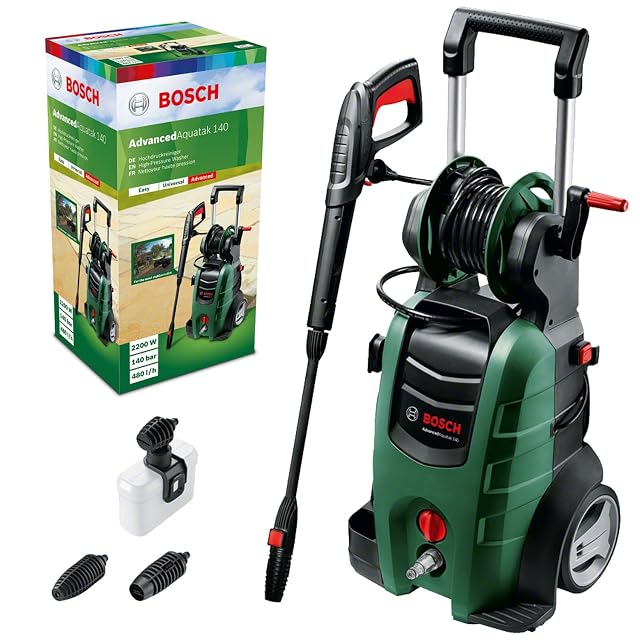
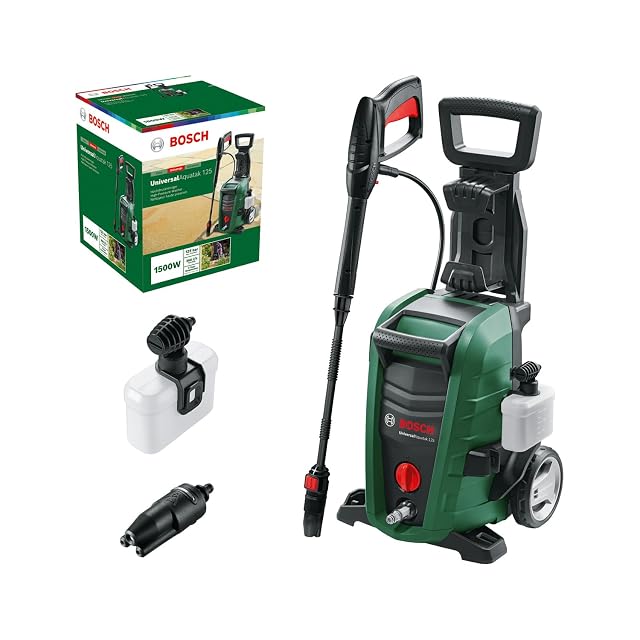
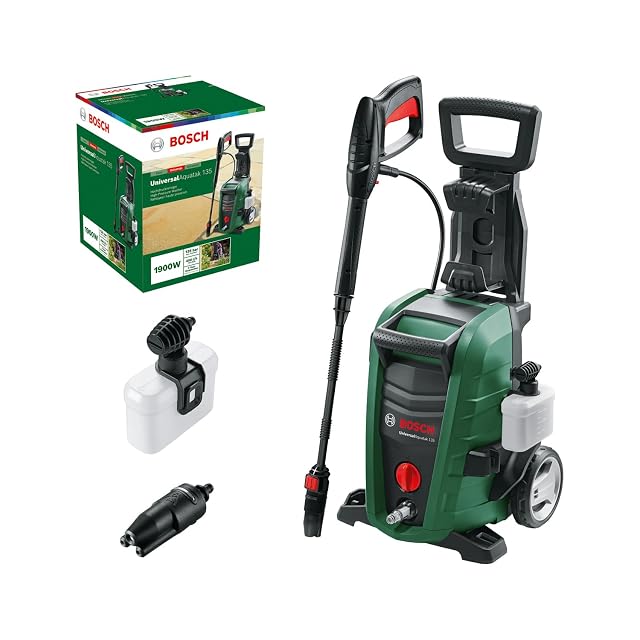
Comparing pressure washers is usually impossible because manufacturers publish different things. Nilfisk publishes pressure, flow, area performance and input power on this listing, which makes it directly comparable to the Kärchers in this group and not comparable to the Bosch machines, which quote pressure alone. That transparency is worth something in itself: a specification you can check is a specification the maker expects to be checked.
The hose, and the nozzle needle
Six metres of Ultraflex hose is a metre more than the entry Bosch and four less than the top Kärcher. The small item worth noticing is the nozzle cleaning needle in the box — an admission that nozzles block, and the correct tool for it. A blocked nozzle shows up as pulsing pressure or a split spray pattern, and it is fixed in thirty seconds by the needle rather than by buying a new lance.
Where it sits
Against the Kärcher K 5 it gives up thirty-five litres an hour and gains a pressure dial. Against the Bosch UniversalAquatak 135 it costs more and tells you far more about what you are buying. For a household that cleans several different kinds of surface, the dial is the deciding feature.
Availability
One reference across Germany, the UK, France, Italy and Spain. Not listed on Amazon’s US store.
What we like, and what we don't
Strengths
Adjustable pressure — the feature that makes one machine safe on a car and useful on concrete
Two nozzles supplied, soft and rough, rather than one compromise
Every headline figure is published: 140 bar, 465 l/h, 40 m²/h, 1 800 W
Compromises
Six metres of hose, where 10 m is available further up the range
The lifetime warranty Nilfisk advertises is conditional and, on this listing, limited to German invoice and delivery addresses
It lets you set the pressure to the surface rather than to the machine's maximum. That is the difference between a washer that is useful on a car, shutters and garden furniture and one that is only safe pointed at concrete. Most damage done by domestic pressure washers is done at full pressure by someone who had no way to reduce it.
465 l/h against the Kärcher K 5's 500 l/h — does it show?
Barely. Seven per cent of flow is inside the range where technique, nozzle and dwell time dominate. The more useful comparison is that both machines publish the figure at all, which lets you rank them honestly — against the Bosch machines in this group, which publish only pressure, no such comparison is possible.
Is the lifetime warranty real?
It is real and conditional. It requires registration with Nilfisk and, as printed on this listing, applies to customers with a German invoice and delivery address. Read it as a reason to register the machine, not as a reason to choose it — the terms differ by country and can change.